
How to Choose the Right Okavango Delta Camp (Without Getting Overwhelmed)
Planning a safari in the Okavango Delta often begins with a simple idea — find a beautiful camp and build a trip around it. In reality, it quickly becomes far more complex.
No single camp is the best — only the best fit.
With dozens of camps spread across different regions, each offering a slightly different experience depending on the season, choosing the right one is rarely straightforward.
And finding that fit depends on a number of factors that are not always obvious at first glance.
Choosing the right Okavango Delta camp is one of the most important decisions when planning a safari.
Why Choosing a Camp Is More Nuanced Than It Seems
Many camps look similar on paper. They all promise exceptional guiding, beautiful settings and close wildlife encounters — and in many cases, they deliver. The photography, too, is consistently excellent, which can make it surprisingly difficult to narrow things down.
What is less obvious is how much the location of a camp, the time of year and the style of experience will shape your safari. The same camp can feel very different depending on water levels, wildlife movements and seasonal conditions, as we explore in our guide to the best time to visit the Okavango Delta.
There is also a practical layer to this. The “right” camp has to work for you — not just in theory, but for your dates and within your budget. Availability can vary significantly between camps, particularly in peak seasons, and this alone can shape what is realistically possible.
Two camps at a similar price point can offer completely different experiences — not better or worse, simply different. And equally, the “perfect” camp on paper may not be the best fit once all factors are considered. Again, it comes back to the same point — no single camp is the best, only the best fit.
How Location Shapes the Wildlife You See
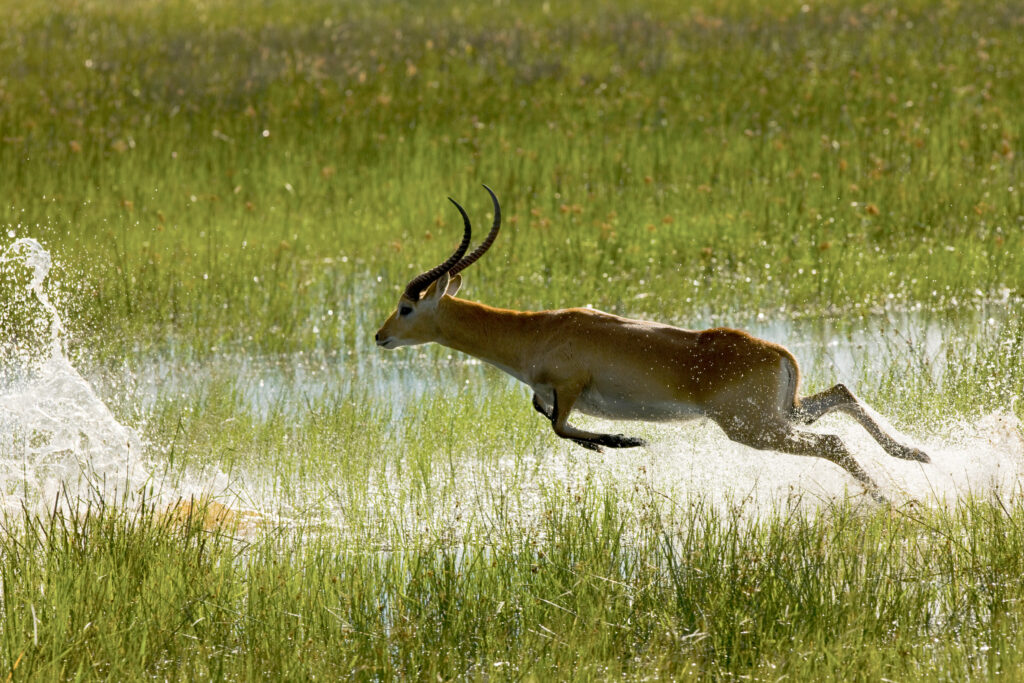
Red lechwe are specially adapted to the Delta’s floodplains, and are most commonly seen in wetter areas.
Where a camp sits within the Okavango Delta has a direct impact on the wildlife you are likely to encounter.
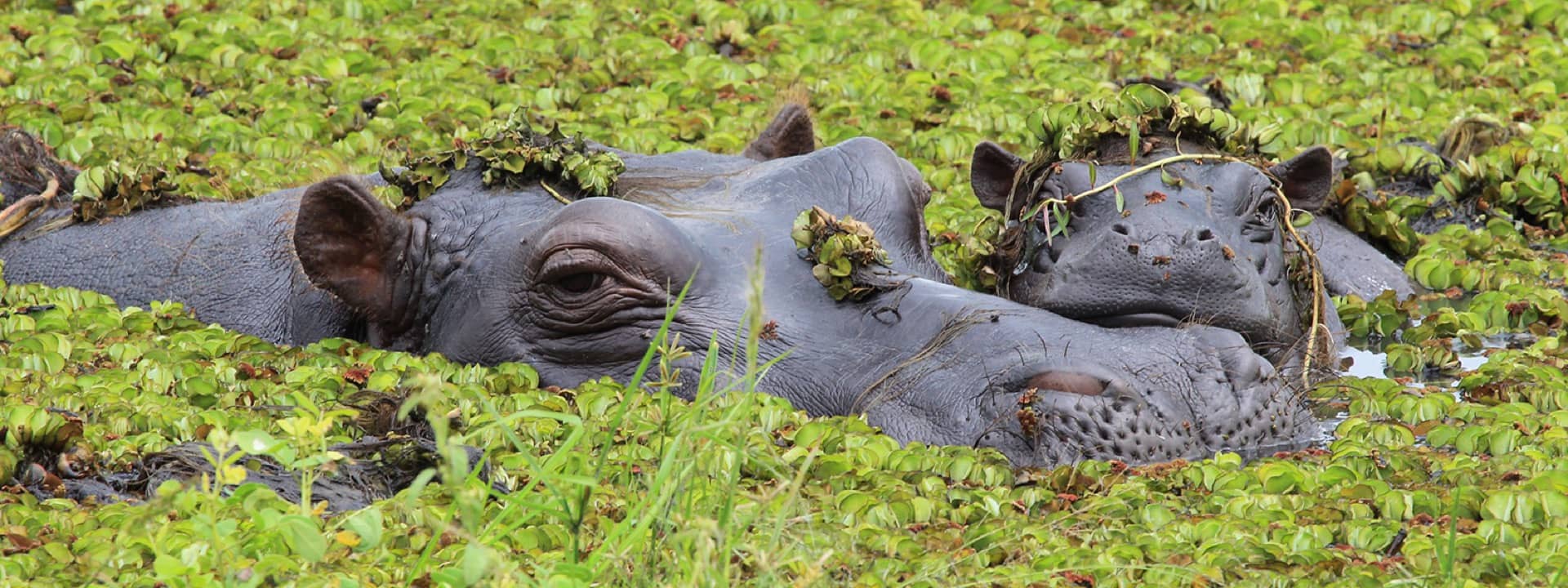
In the wetter, more waterlogged areas, you are more likely to see hippos and crocodiles in the deeper channels, along with antelope such as red lechwe, sitatunga, reedbuck and waterbuck — species that are specially adapted to life in floodplain environments and are rarely far from water.
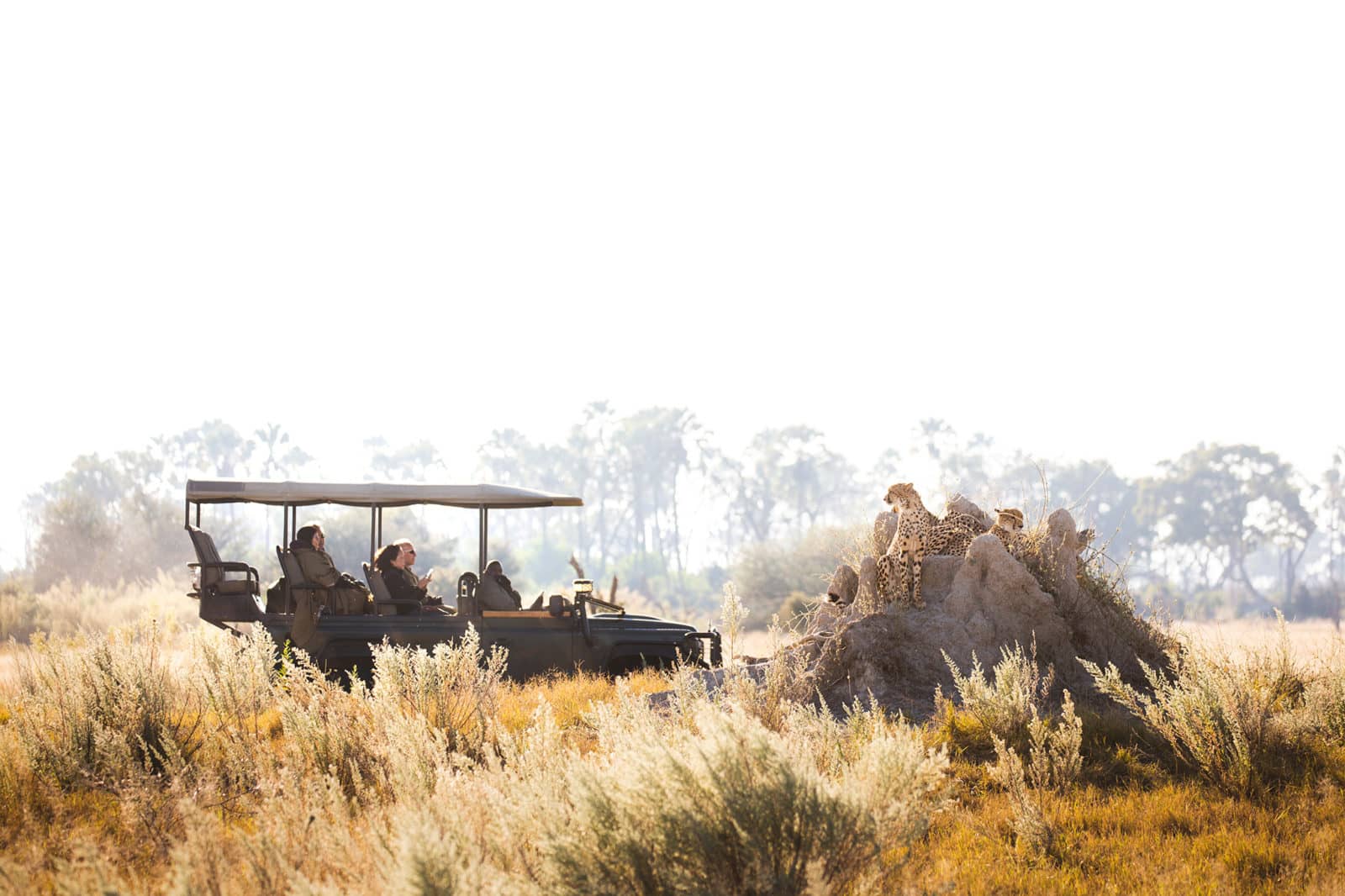
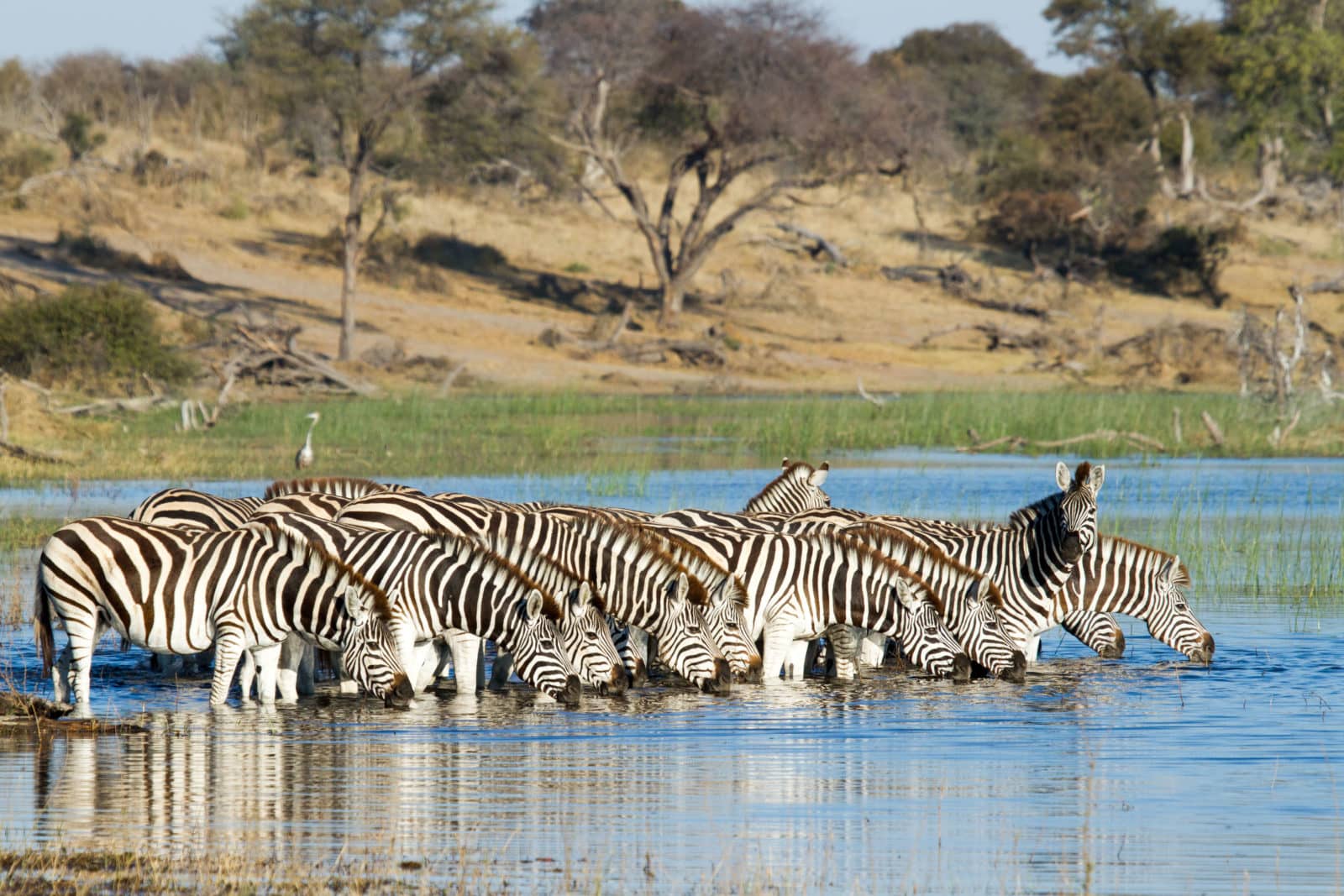
In contrast, the drier areas of the Delta tend to support species such as impala, wildebeest, zebra, giraffe and cheetah, with the fringes of the Delta offering the possibility of more unusual antelope such as sable and roan.
That said, the Okavango is not neatly divided. The majority of wildlife moves freely across both wet and dry areas, and species such as elephant and buffalo are widely distributed. Predators, too, are highly mobile, and sightings are never confined to a single type of habitat.
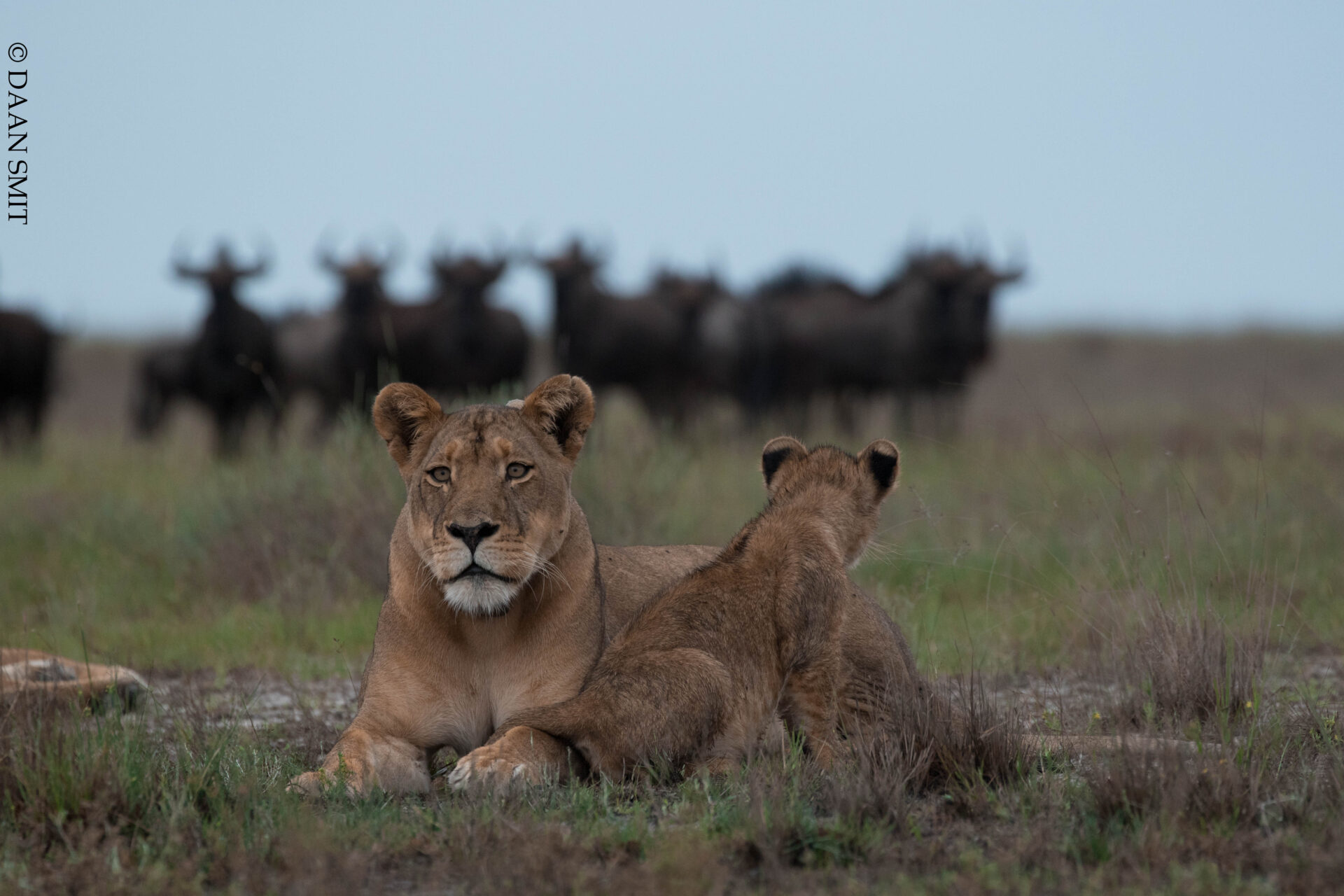
One of the most fascinating aspects of the Okavango is how wildlife has adapted to this environment. Lions, in particular, are well known for wading — and often swimming — between islands, moving confidently through channels in a way that is rarely seen elsewhere in Africa.
Wildlife dynamics also play a role. An area with a strong lion presence may push wild dogs elsewhere, while a large hyena clan can displace weaker lion prides. These patterns are constantly shifting. With no fences in the Okavango, territories expand and contract, and the balance between species changes over time.
For this reason, we often recommend splitting your stay between two camps in different areas where time allows. It is the best way to experience the Delta’s variety — not just in landscapes, but in wildlife and the subtle differences that make each area distinct.
Understanding Land-Based and Water-Based Safaris
Camps in the Okavango are often described as “land-based” or “water-based”, but this refers to the activities on offer, not whether there is water in the area.
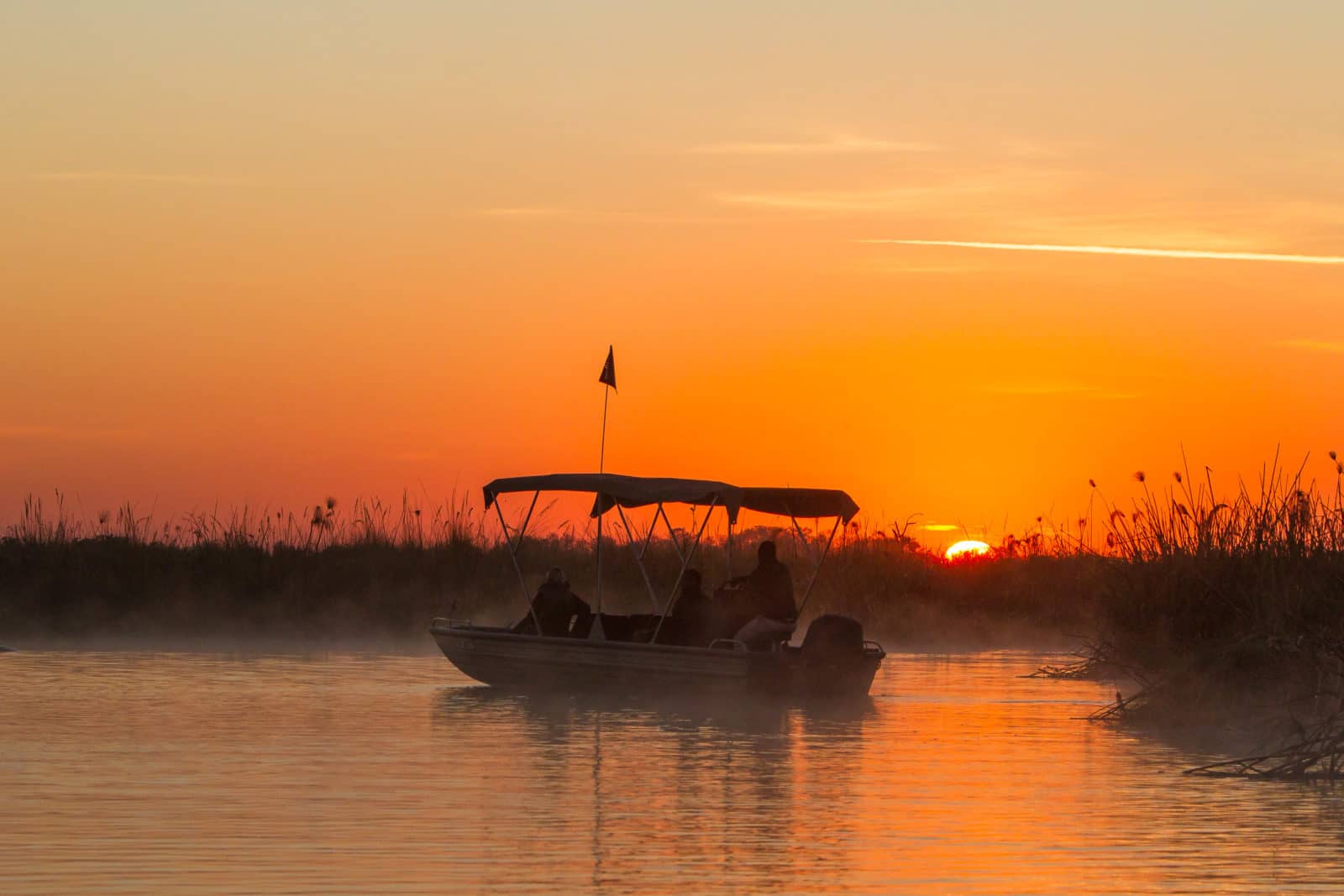
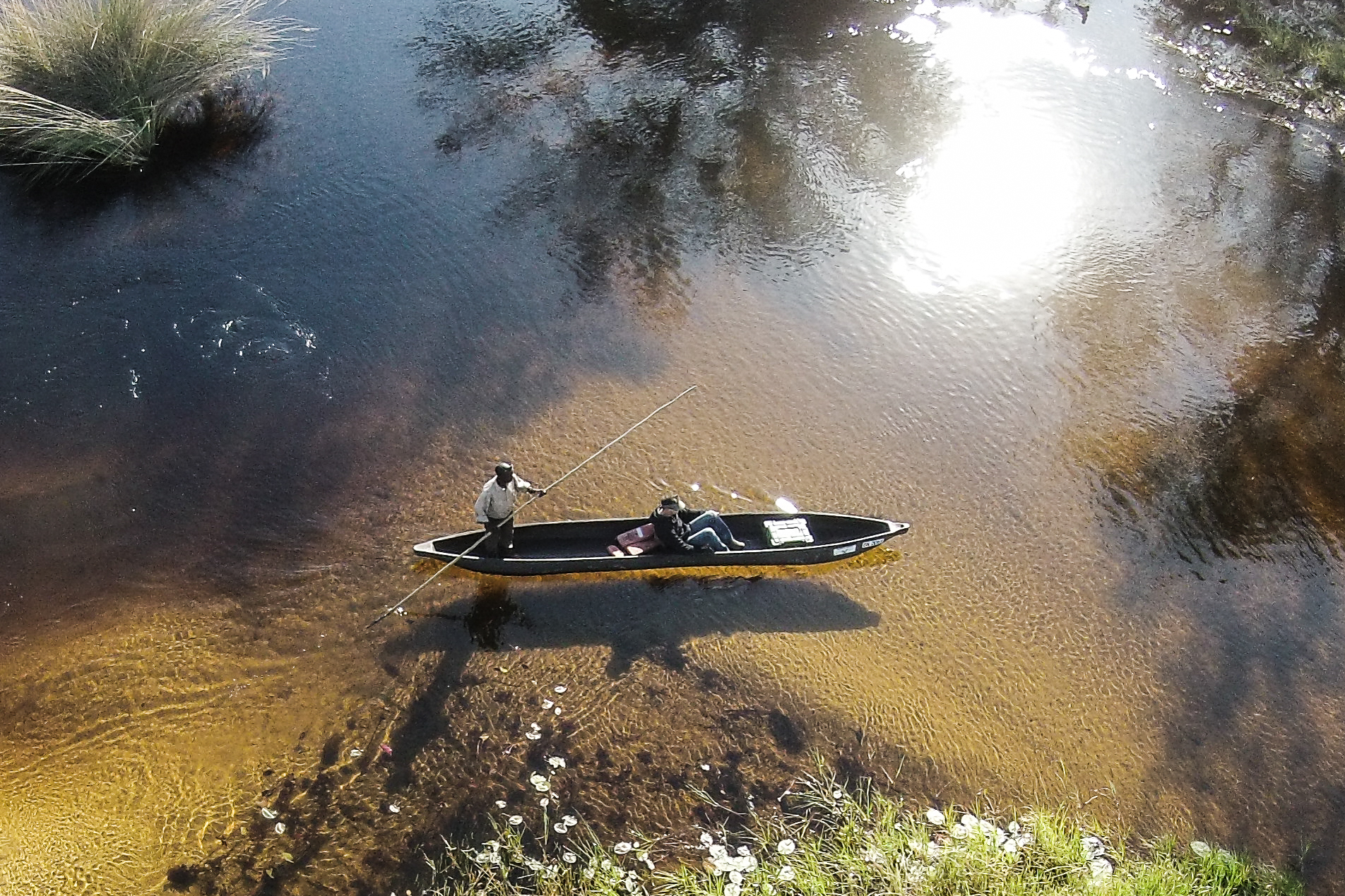
Much depends on seasonal water levels. Some camps have permanent deep channels, allowing for year-round boating and mokoro excursions, while others offer water activities only when flood levels allow. In particularly wet years, some areas can become too flooded for productive game drives, while in drier periods the same camps may operate almost entirely on land. In particularly strong flood years, these differences become even more pronounced, as seen in the Okavango Delta flood in 2026.
Equally, a land-based camp does not mean there is no water at all. In many cases, you will still see beautiful Okavango channels and floodplains — the water is simply too shallow, seasonal or fragmented to safely conduct boating or mokoro activities.
It is also worth noting that not all water-based camps are focused on big game viewing. Many are designed around a more immersive Delta experience — exploring channels by boat, drifting quietly in a mokoro, or walking across islands and floodplains.
Other water camps, such as Camp Okavango and Xugana, are set in areas where walking safaris can regularly encounter elephants, predators and other big game, offering a stronger balance between activities and wildlife viewing.

The Rhythm and Style of a Safari Camp
Beyond wildlife and location, the overall feel of a camp can shape the experience just as much.
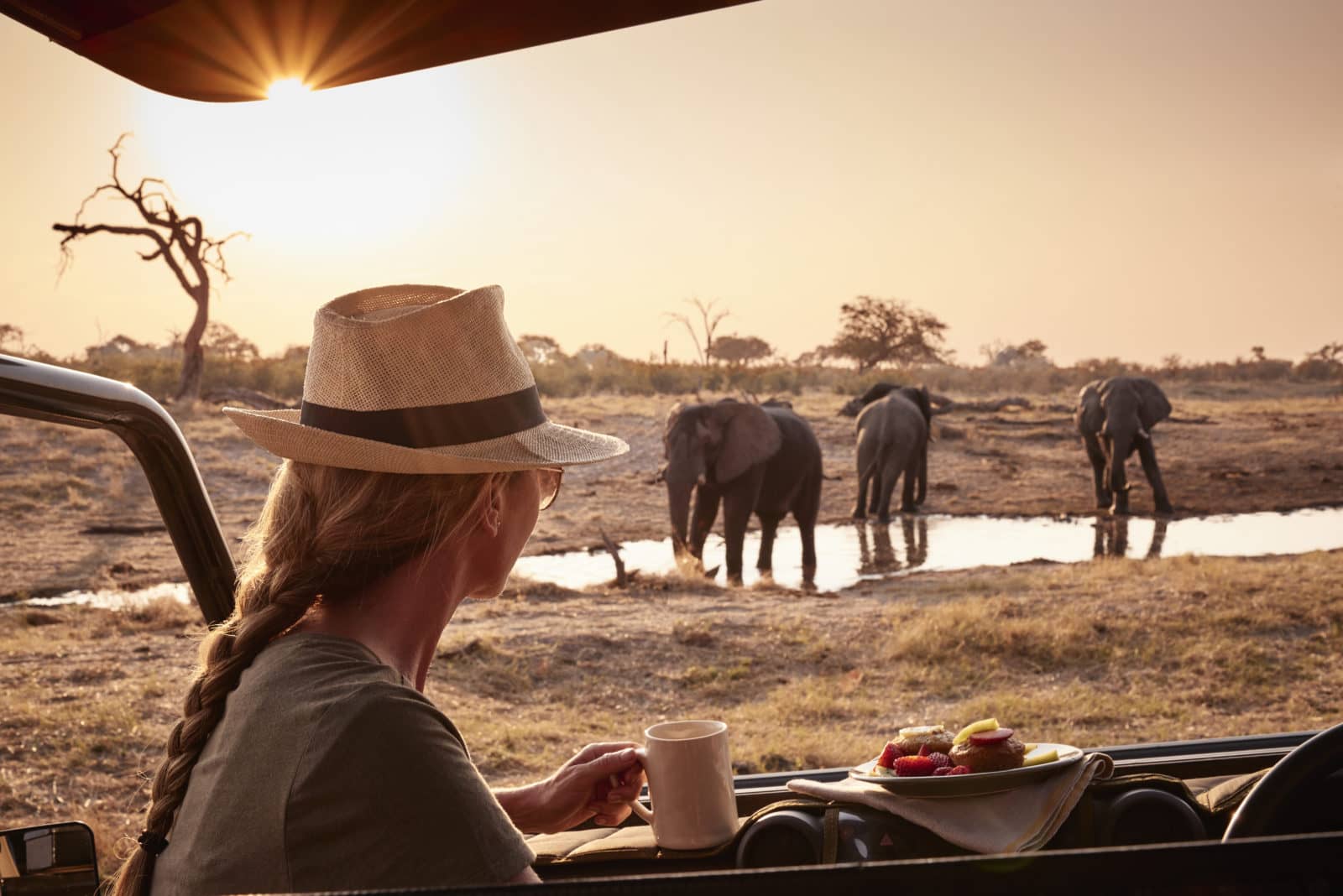
Some camps favour very early starts, heading out at first light with little more than coffee and a biscuit, followed by a light breakfast in the bush. Others take a more relaxed approach, beginning the day with a proper breakfast before heading out, still with excellent chances of strong sightings.
Dining style also varies. Many camps in Botswana have a communal approach, with guests sharing a table at the end of the day. Others offer private dining as standard.
For some travellers, food is an important part of the experience, and there are noticeable differences between camps. Some consistently deliver exceptional meals, while others take a simpler approach — sometimes from surprisingly modest bush kitchens. Some of the best food in the Delta can come from the most unassuming settings.
Interiors can also play a role. For some, the design and feel of a camp contribute to the sense of a luxurious holiday. For others, it matters far less. It is simply another element to weigh when considering what will feel right.
Should You Stay in One Camp or Two?
If time allows, we often recommend staying in at least two different camps.
The Okavango Delta is not a single, uniform destination — it is a collection of ecosystems, each with its own character. Moving between camps allows you to experience different landscapes, different wildlife patterns and a broader range of activities.
That said, there are a small number of camps that can work very well as a single base for four nights or more. These tend to be in areas with a reliable mix of land and water activities throughout much of the year, combined with consistently strong wildlife. However, these are the exception rather than the rule.
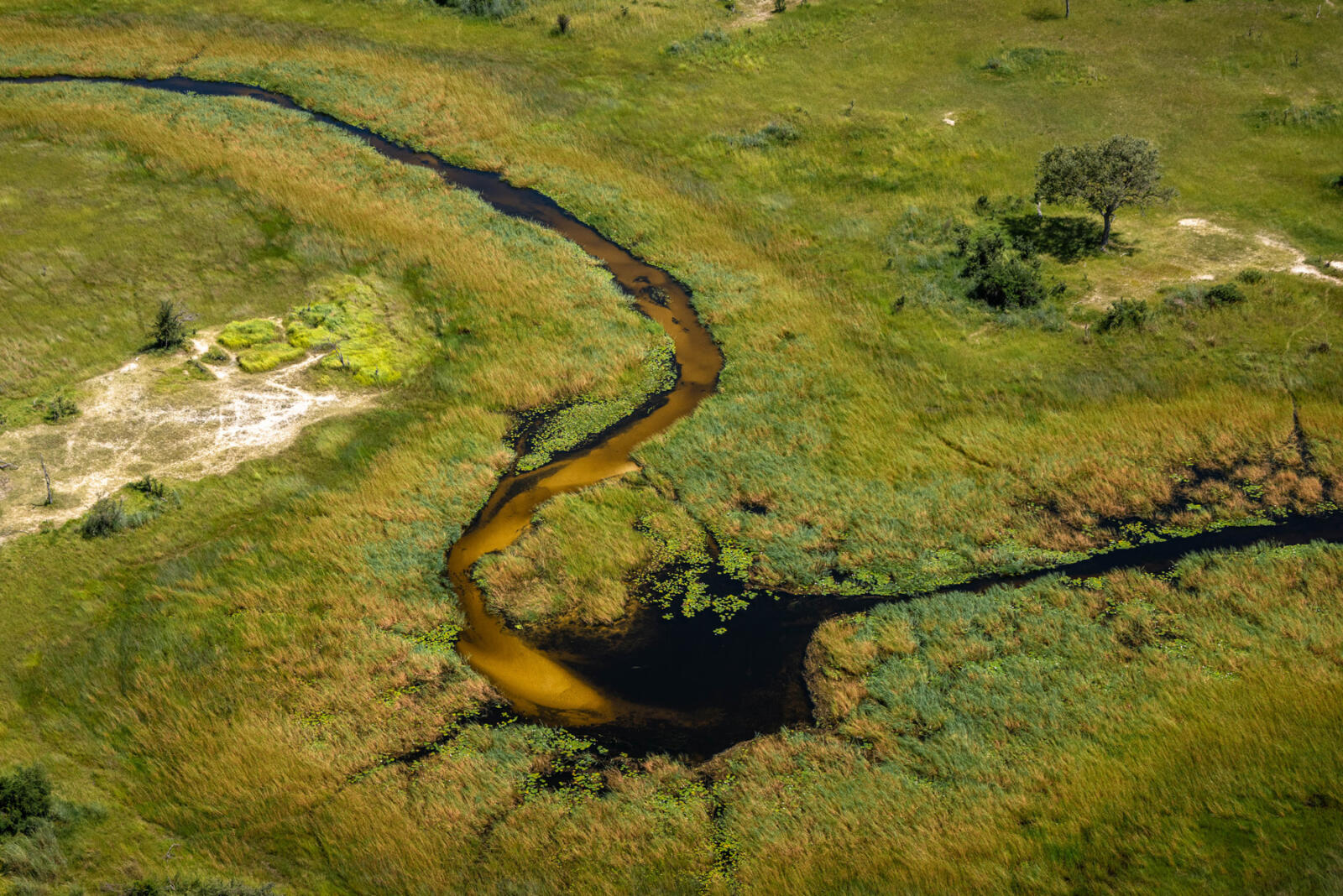
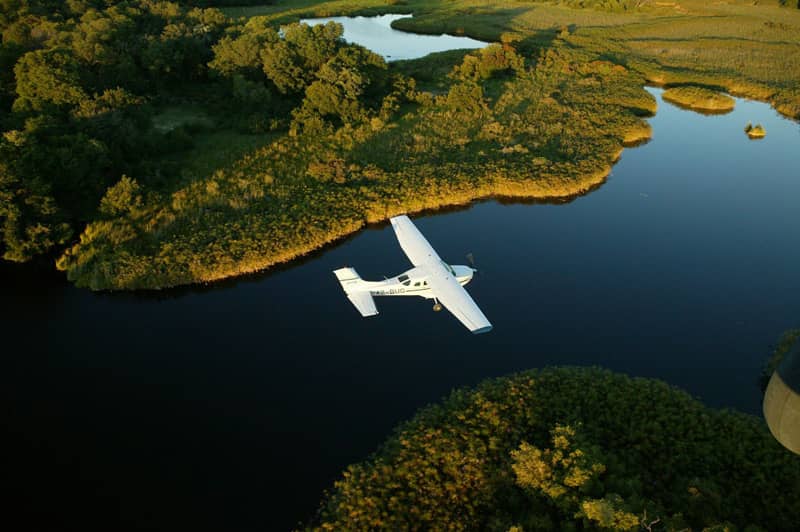
Transfers are typically short light aircraft flights, often under an hour, and are very much part of the experience. Flying low over the Delta, watching the channels wind through the landscape, is often a highlight in itself.
Why Speaking to a Safari Specialist Makes a Difference
While it is entirely possible to research camps independently, most people find that clarity comes from a conversation.
At Okavango Delta Explorations, this is exactly what we spend our time doing. As a team, we are in Botswana and across southern Africa for several months each year — revisiting camps, meeting guides and owners, and keeping up to date with how areas are evolving season by season.
That means our recommendations when choosing the right Okavango Delta camp are based on current, first-hand understanding, supported by long-standing relationships and honest feedback from the people on the ground.
Importantly, our advice is entirely unbiased, and there is no cost difference compared with booking direct. What we offer instead is clarity — and, just as importantly, confidence in the decisions you are making — helping you navigate the options, manage expectations, and match your priorities to the right camps.
Finding the Right Fit
In most cases, the best safari is not something that can be selected from a list.
It comes from a conversation — and from understanding what will make the experience feel right for you.
Understanding what you are looking for, how you like to travel, and what will make the experience feel truly special is what allows us to recommend the right combination of camps — not just good ones, but the right ones.
We offer this as a complimentary consultation, and it is often the simplest way to move from uncertainty to a plan that feels both exciting and entirely right. Simply get in touch and we can talk it through.




Experience the Okavango Delta
Contact us for more information and to start planning your Okavango safari
Contact